
Designing a Wine Pairing Tasting Menu for Private Luxury Events
A wine pairing tasting menu is a course-by-course program that matches a specific wine to each dish, progressing from lighter, higher-acid wines toward fuller-bodied, more complex ones as the meal builds. For a private luxury event, the strongest format is a sommelier-led full pairing or a customized half pairing served with volume-controlled pours.
Sparkling to open, whites and a rosé bridge through the middle
Light reds, then full-bodied reds at the meal’s peak
Fortified or dessert wine to close the arc
Key Takeaways
A successful wine pairing tasting menu depends on sequencing wines from light to full body, matching structure to each dish, and pacing service around the kitchen rather than the clock.
Point | Details |
Follow the standard sequence | Move sparkling to whites to light reds to full reds to fortified wine to protect the palate. |
Match weight before flavor | Pair wine body to food weight first, then fine-tune with acidity, tannin, and sweetness. |
Choose the right program | A full pairing offers ceremony; a half pairing controls alcohol volume and cost. |
Control pours, not ambition | Keep pours to roughly two to three ounces and let guests hold or skip a glass. |
Prioritize pacing in planning | Bonnie Rae coordinates sommelier and kitchen timelines so pairing service never feels rushed. |
Table of Contents
What Is the Standard Wine Pairing Tasting Menu Sequence?
The sequence exists for a physiological reason, not just tradition. Your palate fatigues as you eat and drink. Heavy tannin or high alcohol served too early numbs the taste buds for everything that follows, which is why sommeliers protect the beginning of the meal with wines that wake the palate up rather than flatten it.
The canonical progression, refined across decades of fine-dining service, moves like this:
Sparkling wine to cleanse and prime the palate for the first bite
High-acid whites for raw or lightly cooked seafood and vegetable courses
Rosé or a “bridge” white to transition from delicate to richer preparations
Light reds (Pinot Noir, Gamay) for poultry or mushroom-forward dishes
Full-bodied reds (Cabernet, Syrah, Barolo) at the protein-heavy peak of the menu
Fortified or dessert wine to close on a note of concentrated sweetness
A well-built pairing menu typically pours five to eight glasses of roughly two to three ounces each, which sounds like a lot until you realize the total volume across an entire multi-course dinner comes in around one and a half to two standard glasses. Some hosts prefer a regional variant, tracing a single country or valley through the sequence instead of a classic weight progression. Others now request a parallel non-alcoholic track for sober-curious guests, built from verjus, botanical hydrosols, or complex teas that mimic the acid and texture wine would otherwise provide.
How Should Each Course Be Paired With Wine?
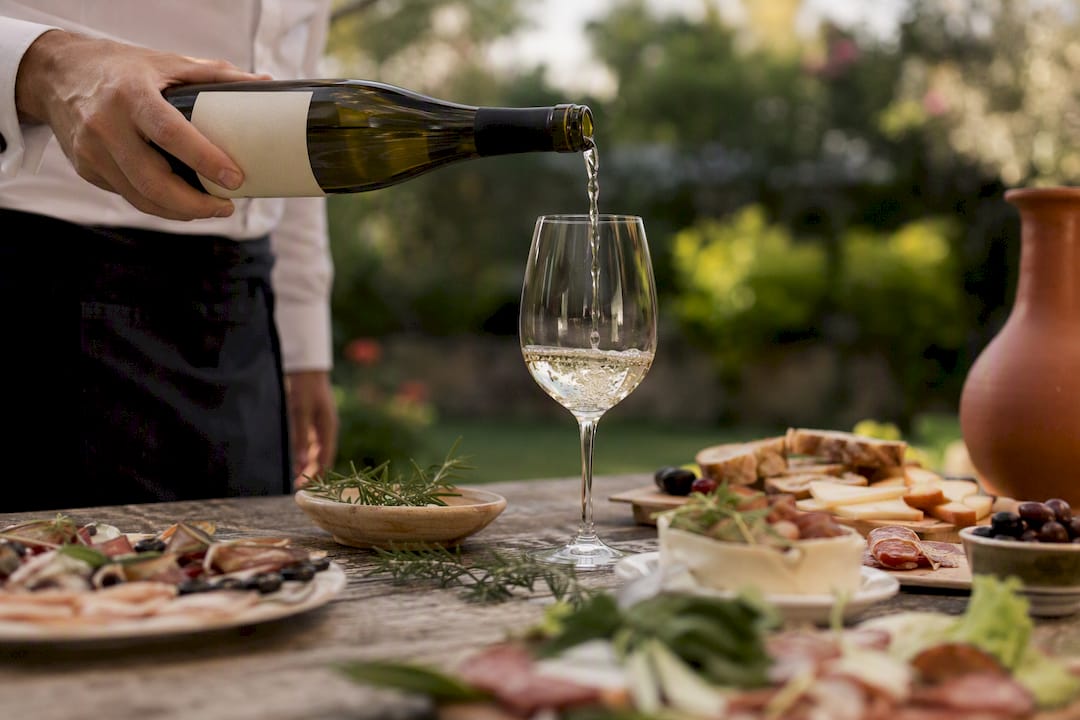
Body has to match body. A delicate halibut crudo drowns under a big Napa Cabernet; a 24-ounce dry-aged ribeye makes a crisp Sancerre taste thin and irrelevant. The foundational principle sommeliers train on is simple: weight to weight, texture to texture, then let acidity, tannin, and sweetness do the fine-tuning.
Here is how that plays out course by course:
Raw bar or crudo: Classic pick is a bone-dry Chablis for its saline minerality. The creative alternative is a skin-contact orange wine, which brings enough texture to stand up to citrus and olive oil without overwhelming the fish.
Soup or vegetable course: A classic Muscadet keeps things clean. A more surprising choice is a dry Fino sherry, whose nutty oxidative character plays beautifully against roasted root vegetables.
Poultry or light game: Village-level Burgundy is the safe, elegant choice. For contrast, try a chilled Beaujolais Cru, which brings enough acidity to cut through a butter-based sauce.
Red meat centerpiece: A Bordeaux blend or Barolo is the expected match. For something unexpected, an Amarone’s dried-fruit concentration pairs strikingly with a dish built on mushrooms or truffle.
Cheese course: Vintage Port with blue cheese is a steakhouse cliché for a reason. A drier, nuttier oloroso sherry offers the same richness with less sugar, which some palates prefer late in a long meal.
Pro Tip: Sauce changes everything. A butter-poached lobster wants a richer Chardonnay than the same lobster served with a citrus vinaigrette, which pulls toward something leaner and higher in acid. Brief your sommelier on the sauce, not just the protein.
What Sommelier Principles Actually Drive a Good Pairing?
Rote pairing rules (“white with fish, red with meat”) collapse the moment you’re working with a tasting menu built around technique rather than protein. What holds up under pressure is a framework built on four variables:
Weight (body): How the wine feels in the mouth, light to full. This is the first filter, before flavor even enters the conversation.
Acidity: Cuts through fat, richness, and cream. A high-acid Riesling rescues a foie gras course a heavier white would simply drown.
Tannin: Binds to protein and softens against fat, which is why a tannic Cabernet feels harsh with fish but harmonious with a marbled steak.
Sweetness: Balances heat and salt, and must roughly match or exceed the sweetness of the dish itself, or the wine tastes stripped and sour.
From there, pairing strategy splits into two camps: congruent pairings that echo the dish’s own flavors, and contrasting pairings that use the wine to balance or cut against it. A rich, buttery Chardonnay next to a buttery lobster is congruent. A crisp Champagne cutting through the same lobster’s richness is contrast. Neither approach is superior. The choice depends on whether you want the course to feel amplified or refreshed before the next one lands.
When a dish and its origin share a region, that pairing has usually already been solved for you. A Chianti with tomato-based Tuscan cooking, a Sancerre with a goat cheese from the same valley. Regional pairing works because generations of cooks and winemakers built the two things side by side.
What Pairing Program Should You Choose for Your Event?
Sommeliers structure paired service into a few standard formats, and choosing the right one depends on how much ceremony, customization, and budget flexibility your guests want.
Full sommelier pairing: One distinct pour per course, fully curated. This is the most theatrical option and the one most guests associate with a true tasting-menu experience, but it also carries the highest labor and inventory cost.
Half pairing: Roughly half the courses receive a dedicated pour, often alternating or grouped around the menu’s heavier moments. This format reduces total alcohol volume and cost while still marking the meal’s key transitions.
By-the-glass or bottle selection: Guests choose their own wines from a curated list rather than following a set sequence. It sacrifices narrative cohesion for flexibility, which some hosts prefer for mixed-preference guest lists.
Collector or vertical requests: If a guest wants to open something from a personal cellar or request a specific vintage, most sommelier teams can build the pairing around that bottle rather than the reverse. Flag this early. It changes course order.
Non-alcoholic pairing: A parallel track using verjus, complex teas, or botanical infusions built to mirror the acid and texture role wine plays.
Full pairings command the highest price point; half pairings and by-the-glass programs scale down from there. If a guest wants an exception, whether a sober alternative or a bottle from their own collection, raise it during initial planning rather than the night of the event.
How Do You Get the Pacing and Service Right?
Pacing is coordinated primarily with the kitchen, and it is often the single biggest determinant of whether guests feel cared for or rushed. Get it wrong and even a flawless pairing feels chaotic.
Pour roughly two to three ounces per course rather than a full glass, which keeps guests comfortable across a long meal without overserving.
Instruct the sommelier team to hold the next pour until the previous course is cleared, syncing wine service to plate timing rather than a fixed clock.
Sequence glassware deliberately: flutes for sparkling, wider bowls for structured reds, and a smaller pour glass for fortified wine at the close.
Decant any young, tannic reds table-side well before the course arrives, both for the wine’s sake and for the theater of it.
Pro Tip: Ask your event producer whether guests can request a “hold” or “skip” on any pour. Guests rarely finish every glass in an eight-course pairing, and giving them permission to opt out removes any pressure to keep pace.
How Do You Design a Cohesive Thematic Pairing Menu?
The strongest luxury tasting menus commit to a single storytelling thread, whether that’s a region, a technique, or a single hero ingredient traced through every course, so guests perceive coherence rather than eight unrelated plates. This kind of narrative-driven culinary framing gives both chef and sommelier a shared constraint to design against, which almost always produces a tighter menu than an open brief.
A few frameworks work reliably:
Regional arc: Trace a single country or valley, letting both food and wine originate from the same soil, such as a full Piedmont menu paired against Barbera, Barbaresco, and Barolo in ascending weight.
Ingredient-led story: Build every course around one ingredient, truffle, caviar, or a single heirloom varietal, prepared a different way each time.
Reverse-dessert structure: Open with a savory course styled like a dessert and close the meal with a savory-inflected final wine, subverting guest expectations at both ends.
Whichever framework you choose, build to a hero course, typically the richest protein of the night, and let the dessert wine provide a deliberate release rather than an abrupt stop. Seasonal or regional framing also connects naturally to broader luxury hospitality trends shaping how discerning hosts think about menu design this year.
How Do Event Producers Execute a Flawless Paired Menu?
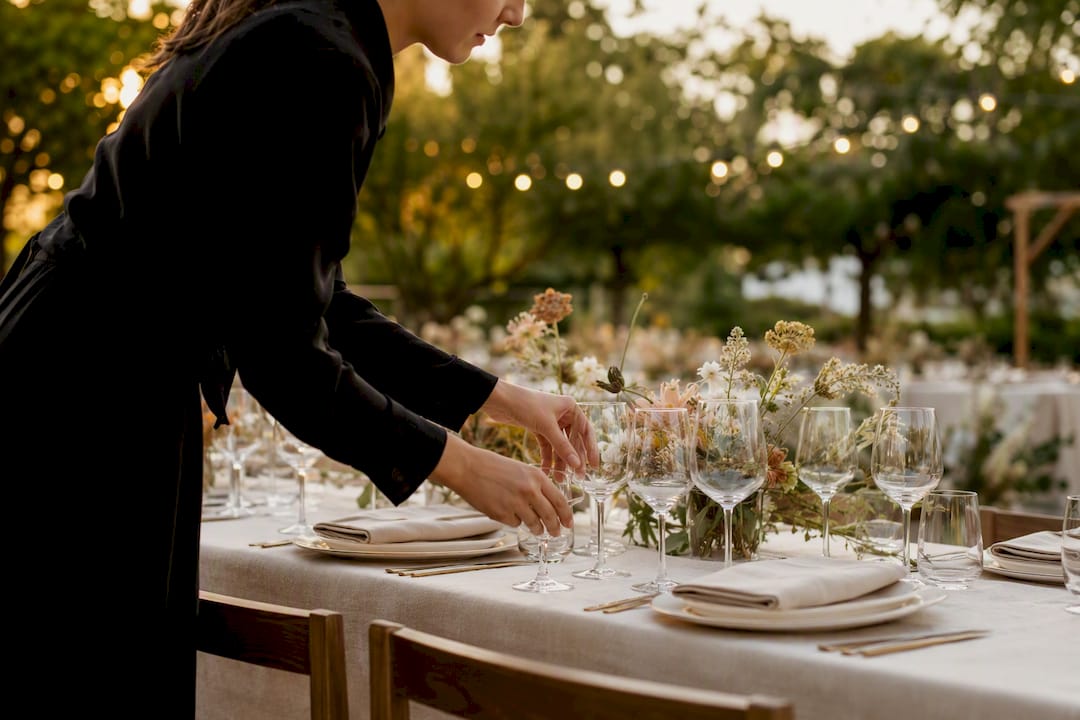
Coordinating a sommelier program inside a private event is a staffing and timeline problem as much as a culinary one. The sommelier’s pour schedule has to sync with the kitchen’s plating schedule, and both have to sync with service staff who know exactly when to clear, pour, and hold.
Before signing a proposal, ask your producer for specifics on:
Staffing ratios for sommelier and service teams relative to guest count
Glassware inventory and backup stock, since a full pairing can require five or more distinct glass types
Liability and liquor liability insurance for the pouring team
A written pacing plan that ties each course to a target pour and clearance time
A dietary-accommodation protocol, since allergies and preferences shift pairing choices course by course
What Does a Wine Pairing Tasting Menu Typically Cost?
Restaurant tasting-menu pairings generally run in a defined, published range, while private-event pairings vary more widely based on guest count, bottle selection, and staffing. The biggest cost drivers are bottle rarity, sommelier labor, travel for offsite venues, glassware rental, and any corkage arrangement if a host supplies their own wine.
Here’s the part most hosts don’t expect: a more expensive bottle does not guarantee a better pairing. Structural fit, acidity, tannin, and body, matters more to a successful match than price tag. A skilled sommelier can often substitute a well-chosen $40 bottle for a $150 one at the same structural weight without guests noticing a drop in quality.
Ask about half-pairing or hybrid programs to control total pour count and cost
Request substitution flexibility rather than locking every bottle in advance
Confirm whether glassware and corkage are itemized or bundled into the proposal
What Actually Matters Most in a Luxury Wine Pairing Program
Most guidance on tasting-menu pairings treats the wine list as the whole story. It isn’t. The sequence, the acidity math, the congruent-versus-contrast debate, all of that is table stakes that any competent sommelier already knows cold. What actually separates a forgettable pairing dinner from one guests talk about for years is pacing, and pacing is a staffing and logistics problem, not a wine-list problem.
Conventional pairing advice underweights this almost entirely. It obsesses over which Burgundy goes with which fish and barely mentions that the sommelier needs a clear signal from the kitchen on when to pour, or that guests need permission to hold or skip a glass without feeling rude. In a private setting, with no other tables to benchmark against, a host’s instinct is often to pour more, not less. That instinct is usually wrong. A tighter, better-paced half pairing beats a rushed full pairing every time.
If you’re briefing a vendor or commissioning a turnkey program, prioritize the operational plan first and the bottle list second. Ask how pacing gets coordinated with the kitchen before you ask what’s being poured with the fish course. The wine matters. The choreography around it matters more.
— Bonnie Rae
Let Bonnie Rae Build Your Sommelier-Paired Tasting Menu
Bonnie Rae designs the full arc of a private wine pairing dinner, from sommelier curation and staffing ratios to the kitchen timeline that keeps every pour on pace, so hosts get a full pairing that reads as effortless rather than one that feels rushed by the fourth course.
Where a restaurant reservation limits you to a fixed menu and a fixed room, a bespoke private program lets you set the theme, the guest count, and the pacing around your own event, with a sommelier team and kitchen briefed to your exact specifications rather than a house standard. A proposal from Bonnie Rae outlines menu curation, sommelier and service staffing, glassware and rental logistics, and a written pacing plan tied to your guest count and venue. Browse past events on the Bonnie Rae portfolio to see how past pairing dinners came together, then visit Bonnie Rae to start a proposal for your next private tasting menu.
Sources
Recommended
Comments