
Event Generator Power: Planning and Specs for Luxury Events
Start with the math, not the machine: estimate your event’s total watts, add a 20–30% safety margin, and size your generator so it runs at roughly 50–75% of rated capacity. Below 5–15 kW covers an intimate estate dinner or seated wedding for a few dozen guests. Mid-range events, think 200 to 500 guests with a band, catering kitchen, and lighting design, land in the 25–60 kW band. Large productions, galas, athlete appearances, or multi-tent corporate activations, push into 80–200 kW, often across multiple units. Anything above roughly 60–100 kW typically requires three-phase power, not standard single-phase. The immediate next step is simple: build a line-item load list today and get it in front of a licensed electrician or temporary power partner before you commit to a rental.
Small event (intimate dinner, small wedding): 5–15 kW
Mid-size event (corporate reception, mid wedding): 25–60 kW
Large event (gala, concert, multi-tent activation): 80–200 kW or multiple units
Quick rule: ideal generator loading sits between 50% and 75% of rated capacity; dip below 30% on a diesel unit and you risk wet stacking, push past 80% and you risk overheating.
Key Takeaways
Reliable event power comes down to accurate load math, the right generator size run at 50–75% capacity, and a distribution plan verified by a licensed electrician before doors open.
Point | Details |
Build the load list first | Inventory every device, sum wattage, and add a 20–30% safety margin before choosing a generator. |
Size for the sweet spot | Keep expected load at 50–75% of rated capacity; avoid running below 30% or above 80%. |
Go three-phase above 60–100 kW | Loads past that threshold need three-phase power for stable distribution across multiple systems. |
Distribution design prevents outages | Separate audio, lighting, and video circuits, and follow NEC 590 GFCI and NEC 250 grounding standards. |
Plan fuel and placement together | Keep generators 75–150 feet from guests, downwind, with contingency fuel scheduled for runs past six hours. |
Table of Contents
Calculating Event Generator Power Needs Before You Book
Every reliable power plan starts with a spreadsheet, not a guess. List every device drawing electricity: AV racks, moving lights, LED walls, catering equipment, HVAC units, vendor food trucks, phone charging stations, even the coffee cart. For each item, pull the nameplate wattage or calculate it yourself using watts = volts × amps. Motors, compressors, and refrigeration units deserve special attention here, since they draw a surge of inrush current at startup that can spike two to three times their running wattage for a second or two.
Inventory every powered item by department (production, catering, décor, guest services).
Record nameplate wattage or calculate watts = volts × amps for each device.
Flag motorized or compressor-driven equipment for inrush current.
Sum the total running wattage across all categories.
Add a 20–30% safety margin to that total.
Convert the final number to kilowatts, then to amperage at your service voltage (120V or 208V) to confirm panel and generator sizing.
That safety margin isn’t padding. Standard practice adds roughly 20% to the base load calculation specifically to absorb startup surges and the inevitable last-minute additions, a second espresso machine, an extra follow spot, a client’s request for heat lamps at 4 p.m. on show day.
Pro Tip: Treat your load calculation as a living document. Every time the production scope shifts, even by one rented espresso machine, send the updated list back to your electrician for a quick sanity check rather than assuming the original margin still covers it.
Choosing the Right Generator Size and Configuration
Matching guest count and production scale to the correct kW rating keeps a luxury event running quietly instead of scrambling. Industry sizing guides put roughly 50 guests at 8–10 kW, 200 guests at 25–30 kW, and a 1,000 guest production at 80–100 kW, with full festivals climbing to 200–400 kW or beyond using paralleled units.
Small (intimate dinners, micro weddings): 5–15 kW, typically single-phase.
Mid-size (corporate receptions, weddings with full production): 25–60 kW.
Large (galas, brand activations, athlete events): 80–200 kW, frequently three-phase.
Festival-scale: 200–400+ kW across multiple parallel generators.
Three-phase becomes necessary once your load crosses that 60–100 kW threshold, and it exists for good reason: it distributes current across three separate legs rather than overloading one. A 100 kW three-phase generator delivers roughly 280 amps at 208V spread across those three legs, which is far more stable for running simultaneous lighting rigs, kitchen equipment, and climate control than a single-phase setup straining under the same total draw.
For guest-facing placements, quiet or inverter-style generators paired with low-emission fuels like propane or renewable diesel are worth the premium. They run at lower decibel levels and produce cleaner exhaust, both of which matter enormously when your generator sits fifty yards from a seated dinner. The sizing rule stays constant regardless of fuel type: pick a unit where your expected load lands at 50–75% of rated capacity, never closer to the ceiling.
Designing a Distribution Plan That Doesn’t Fail Mid-Event
A generator is only as reliable as the distribution behind it. Main distribution panels (distros) take power from the generator and split it into sub-distros feeding specific zones, kitchen, lighting, audio, guest lounges, so a spike in one system doesn’t trip power to another. Isolating audio, lighting, and video onto separate circuits is standard practice for exactly that reason: a lighting cue shouldn’t be able to kill the band’s monitors.
Use properly rated feeder cable for main runs and appropriately sized branch cable for individual fixtures; cam-lock connectors handle high-amperage feeds far more safely than daisy-chained extension cords.
Never chain multiple extension cords in series; each connection point adds resistance and heat risk.
Follow GFCI requirements for outdoor temporary power, a core provision of NEC Article 590, and ground every distro per NEC Article 250 basics.
Label every circuit clearly at both the panel and the fixture end so a technician can isolate a fault in seconds, not minutes, during a live show.
A knowledgeable temporary power partner will help design this distro layout and select the correct feeder cable before load-in day, which matters more than most planners realize until something trips at cocktail hour.
Where to Place Generators for a Seamless Guest Experience
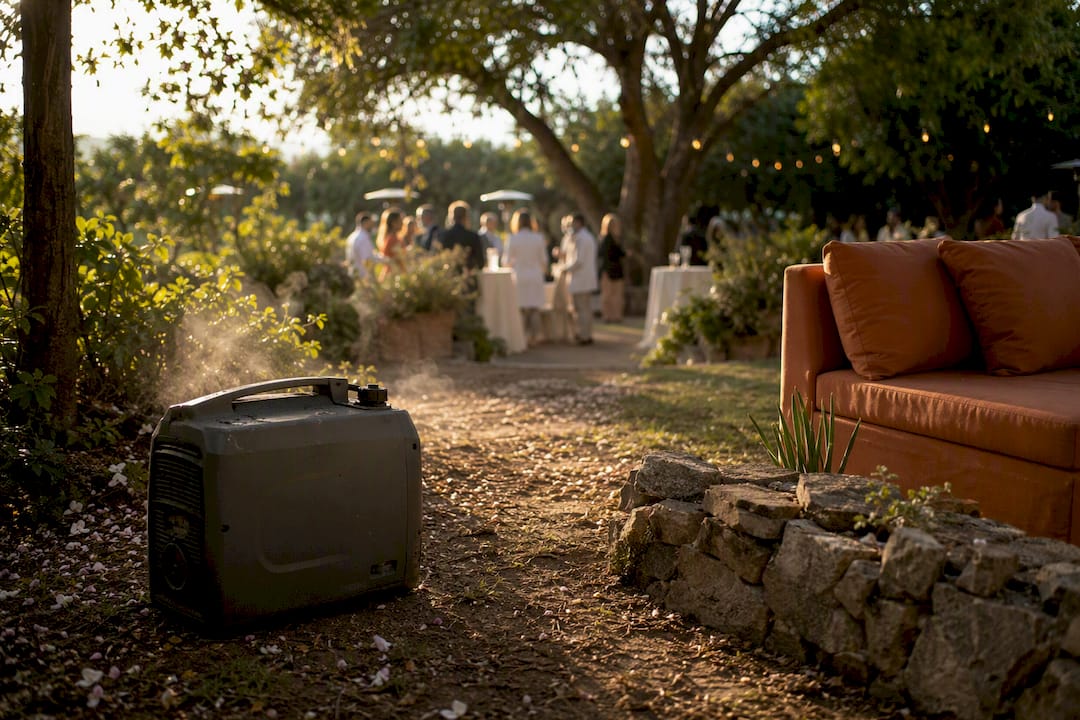
Placement decisions made three weeks out prevent problems no one wants to solve during service. Keep generators 75 to 150 feet from the stage or main guest areas, oriented so exhaust vents downwind rather than across a dining tent or dance floor.
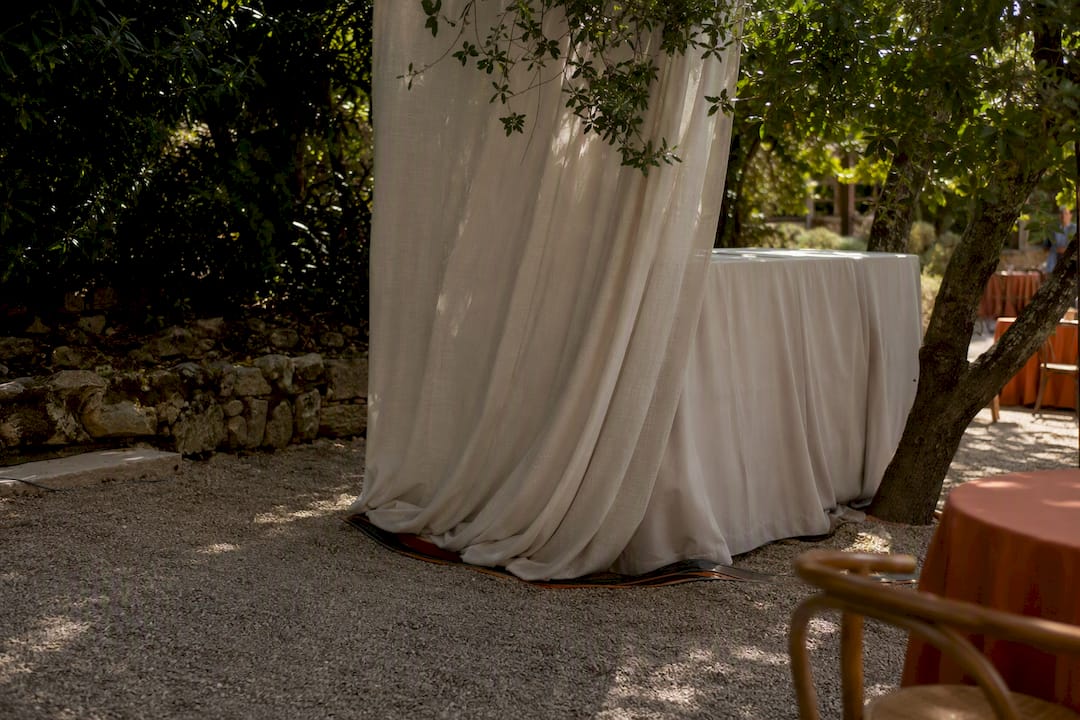
Position units downwind and out of primary sight lines using landscaping, drape, or acoustic fencing.
Plan fuel consumption around roughly 7 gallons per hour per 100 kW at 75% load, and schedule a contingency fuel delivery for anything running past six hours.
Stage generators on road plates or plywood pads to protect turf and manicured grounds.
Route and cover all cable runs crossing guest paths; exposed cable is both a liability and an eyesore at a black-tie event.
Quiet or acoustically enclosed models cost more to rent, but placement and sound choices are exactly where luxury events justify the higher budget line, since guests should never hear the machinery keeping their evening lit.
Building in Redundancy so the Lights Never Drop
Paralleling generators, running two or more units together to share a single load, requires machines with matching specs and synchronization equipment; mismatched generators simply won’t sync safely. This is standard for any event where a power failure would be visible or costly: a live broadcast, a headline performance, a black-tie dinner with a seated program.
Automatic transfer switches (ATS) shift load to a backup unit within seconds and suit unattended or high-stakes productions.
Manual switchover works for smaller events with a technician stationed onsite throughout.
Run synchronization checks and load bank testing before doors open, never during the event.
Pro Tip: Book your onsite generator technician for the full event window, not just load-in. The person who commissioned the system is the fastest person to diagnose it if something shifts mid-show.
Battery Storage and Low-Emission Power for Sustainability-Minded Clients
Pairing a generator with a battery energy storage system (BESS) lets the genset recharge batteries during low-demand stretches, cocktail hour, dinner service lulls, while the battery quietly carries the load. That hybrid approach reduces total runtime, fuel burn, and emissions on events with variable draw across the evening.
Propane and natural gas generators burn cleaner than diesel and suit events prioritizing air quality and reduced odor near dining areas.
BESS pairing works best on events with clear peak and lull patterns, receptions, award dinners, multi-hour galas.
Straight genset rentals still make sense for continuously high, flat loads like festival main stages.
For clients building sustainability into their event brief, this is where the conversation should start, not as an afterthought after the rental is already booked.
A Timeline from Site Visit to Show Close
Power planning fails when it’s treated as a load-in day decision instead of a pre-production milestone. Work backward from your event date:
8 to 12 weeks out: Site visit with the production manager, licensed electrician, and generator vendor to assess service access, ground conditions, and permit requirements.
6 to 8 weeks out: Finalize the load calculation and place the generator order, including backup units for redundancy.
2 to 3 weeks out: Confirm cable run routes, distro layout, and any municipal permitting tied to NEC 590 or NFPA/OSHA temporary power rules.
Load-in day: Onsite verification including grounding checks, GFCI testing, and a full synchronization test if paralleling.
Pre-show: Walk every circuit with the technician present, confirm labeling, and stage contingency fuel.
Bonnie Rae’s Approach to Temporary Power for Luxury Events
At Bonnie Rae, power planning is never a bolt-on to the hospitality design, it’s built into the production plan from the first site walk. As a full-service event production company serving ultra-high net worth individuals, corporate clients, discerning executives, athletes, and cultural icons, we treat generator selection with the same scrutiny we bring to florals or staffing.
The systems guests never notice, power, sound, climate, are usually the ones that determine whether an evening feels effortless or falls apart at cocktail hour.
Our trend reporting on luxury hospitality reflects a broader shift we see with clients: sustainability and stability aren’t competing priorities anymore, they’re both baseline expectations.
Pro Tip: Ask any generator vendor for their load bank testing documentation before signing. If they can’t produce it, that’s your answer about whether they’re ready for a luxury-grade event.
What Concerts, Festivals, and Conferences Actually Draw
Event type shapes power profile more than guest count alone. A seated conference with AV, lighting, and a few catering stations might run a steady 15–30 kW load with minimal variation across the day, predictable and flat. A concert or gala with a full production rig, moving lights, a line array sound system, LED walls, draws far more unevenly: relatively modest during load-in and soundcheck, then spiking hard during the performance itself when every lighting cue and amplifier channel fires simultaneously.
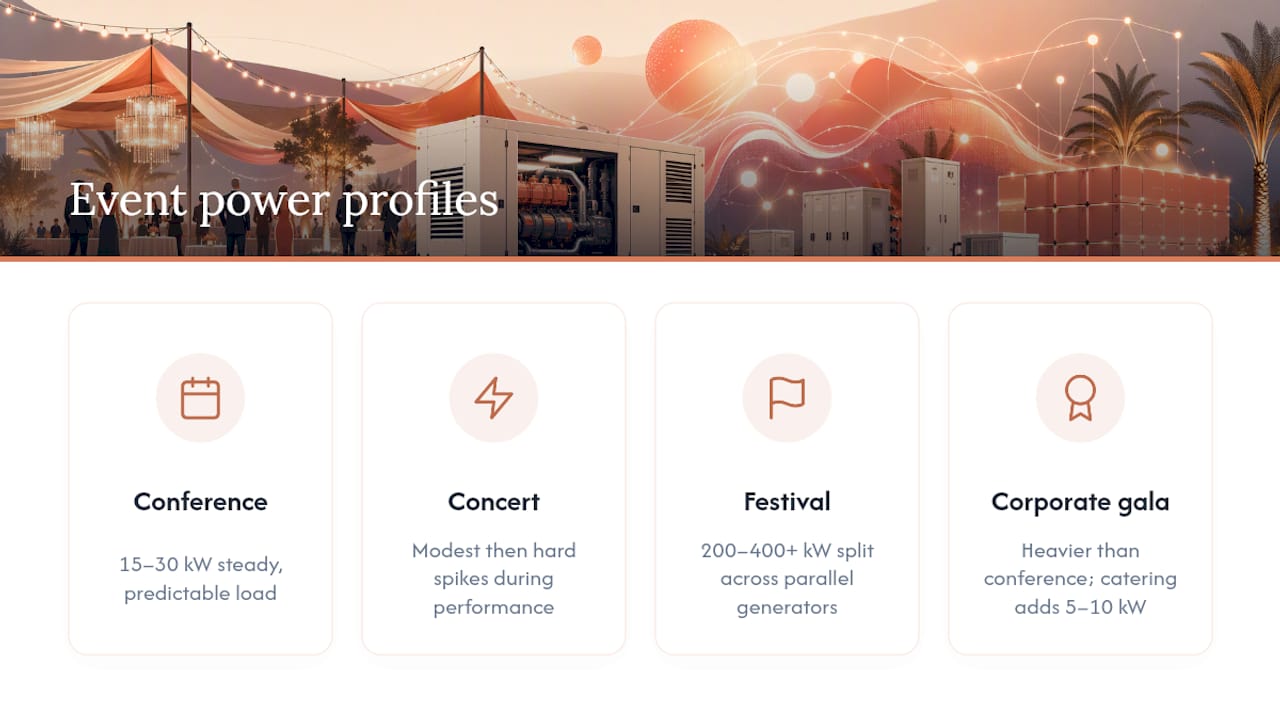
Festivals compound this across multiple stages and vendor zones running in parallel, which is why festival-scale events commonly require 200 to 400+ kW split across several parallel generators rather than one oversized unit. A single massive genset running at 20% capacity during a lull is inefficient and risks wet stacking on diesel units; multiple right-sized generators let you match capacity to the actual moment-to-moment draw.
Corporate galas and brand activations for luxury clients often sit in between: heavier than a conference because of lighting design and AV production, but more predictable than a concert because the program follows a set schedule. Catering alone, chafing equipment, induction burners, refrigerated trucks, can add 5–10 kW that planners frequently underestimate until the kitchen team walks the site.
Understanding your event’s specific draw pattern, flat versus spiking, single-zone versus multi-zone, determines whether you need one generator running steady or several units sized to handle peaks without idling wastefully during the quiet stretches.
Planning for Power Failure Before It Happens
No luxury event can afford an outage during a keynote address, a first dance, or a plated dinner service, which is exactly why backup planning belongs in the initial proposal, not the contingency binder. The baseline approach is a secondary generator sized to at least match your critical circuits, lighting, sound, and any life-safety systems, wired through either an automatic or manual transfer switch.
For events with a single point of failure risk, a headline performance, a televised program, a seated dinner with a formal run of show, redundancy through paralleled generators is worth the added rental cost. If one unit fails or needs fuel mid-event, the second carries the load without an interruption guests would notice.
Beyond hardware, build a communication plan: who calls the vendor, who has the electrician’s direct line, and who makes the call to pause a program if power drops. Many outages are managed successfully not because the backup equipment was flawless, but because the onsite team knew the escalation path within seconds rather than minutes.
Weather-exposed outdoor events need an additional layer: covered generator enclosures, elevated distro panels away from potential flooding, and a plan for high-wind conditions that could affect cable runs or lighting truss. None of this requires exotic equipment, it requires the same disciplined checklist approach that governs every other element of a well-run production.
The Problems That Actually Show Up on Load-In Day
The most common failure point isn’t equipment malfunction, it’s scope creep. Last-minute additions of power-hungry equipment are the single most frequent cause of tripped breakers and overloaded circuits, and they almost always happen because someone added a heat lamp, a second bar blender, or an extra follow spot after the load calculation was already finalized.
Voltage drop is the second recurring issue, particularly on events with long cable runs between the generator and distant tent or stage locations. Undersized feeder cable run too far causes voltage to sag under load, which shows up as dimming lights or underperforming motors well before a breaker actually trips. The fix is planning cable gauge for distance, not just amperage, during the design phase rather than discovering it during a soundcheck.
Grounding faults and improper GFCI wiring cause the third most common category of problems, especially at outdoor venues with damp grass or recent irrigation. A generator that isn’t properly grounded per NEC 250 basics can trip GFCI protection intermittently throughout an event for no obvious reason, frustrating a production team that assumes the generator itself is failing.
When something does trip mid-event, the fastest recovery comes from clear circuit labeling done during setup, exactly the kind of preparation that separates a five-minute fix from a twenty-minute scramble in front of seated guests. This is also where working with an experienced electrical partner pays for itself, since diagnosing a fault under pressure requires someone who understands the full system, not just the generator.
Keeping Fuel Flowing Without Interrupting the Event
Fuel planning is a logistics problem as much as a power problem, and it deserves its own line item in the production timeline. At roughly 7 gallons per hour per 100 kW running at 75% load, a 100 kW generator running an eight-hour event burns through approximately 56 gallons, numbers worth calculating for every unit on site rather than assuming a single tank size covers the day.
Schedule refueling during natural lulls, cocktail hour, a speech program, a band break, never during a performance or plated course when a fuel truck’s presence would be visible or disruptive to guests. For events running past six hours, arrange a contingency fuel delivery in advance rather than reacting to a low-fuel alarm mid-event; most experienced vendors will build this into their proposal automatically if asked.
Keep fuel storage and delivery vehicles positioned well away from guest sight lines and dining areas, both for safety and for the simple reason that a fuel truck parked near a garden ceremony undercuts the atmosphere you’ve spent months designing. Spill containment matters here too, particularly on venue properties with landscaping or water features that require protection under the rental agreement.
For multi-day activations or extended festival runs, track fuel consumption against your original calculation daily. Actual burn rates often run higher than projections once real-world load variation, extra lighting cues, an unplanned encore, gets factored in, and catching that drift early prevents a last-minute scramble for emergency fuel on the final night.
Managing Noise and Environmental Impact Without Compromising Reliability
Sound and emissions are where generator planning intersects most directly with guest experience, and luxury events demand more here than a typical corporate load-in. Distance remains the single most effective noise control: every doubling of distance between the generator and the audience cuts perceived sound roughly in half, which is part of why the 75 to 150 foot placement standard exists in the first place.
Acoustic enclosures and quiet or inverter-style generator models reduce decibel output further for events where even that distance isn’t enough, a garden ceremony with speeches, an intimate dinner with live music, a product reveal requiring silence before the unveiling. These units cost more to rent, but the sound difference is immediately noticeable to anyone standing near the power source.
On the emissions side, propane and natural gas generators produce cleaner exhaust and less odor than diesel, a meaningful consideration when a generator sits near a dining tent or an outdoor cocktail area. Pairing a generator with battery storage compounds the benefit: the engine runs less often and at more efficient loads, cutting both fuel burn and exhaust output across the full event window.
Downwind exhaust orientation deserves the same attention as noise placement. A generator positioned upwind of a seated dinner, even a quiet one, can carry diesel exhaust across the space depending on conditions. Checking wind direction during the site walk, not assuming it during load-in, prevents a problem that’s difficult to solve once the tent is up and guests are seated.
Event Generator Power: What Actually Matters Most
Most guides on event generator power treat sizing as the whole problem. It isn’t. The math is the easy part, any competent electrician can calculate wattage and apply a margin. What conventional advice consistently underweights is placement and sound, the elements that determine whether guests ever notice the power system exists at all.
We’d argue the industry default of “biggest generator available” is actually the wrong instinct for luxury events. Oversizing wastes fuel, invites wet stacking, and often means a louder machine than the event needs. The better question isn’t “how much power can we get,” it’s “how do we hit our load precisely and keep the hardware invisible.”
Prioritize your temporary power partner’s willingness to walk the site and discuss acoustic placement before you ever ask about kW ratings. A vendor who leads with sound and sight lines understands luxury events. One who leads with generator size alone probably doesn’t.
— Bonnie Rae
Sources
Recommended
Comments